AdFarm Brings Farmer Perspectives on Innovation to National Agri-Marketing Audience
 Melissa Webster
April 30, 2026
 Melissa Webster
April 30, 2026
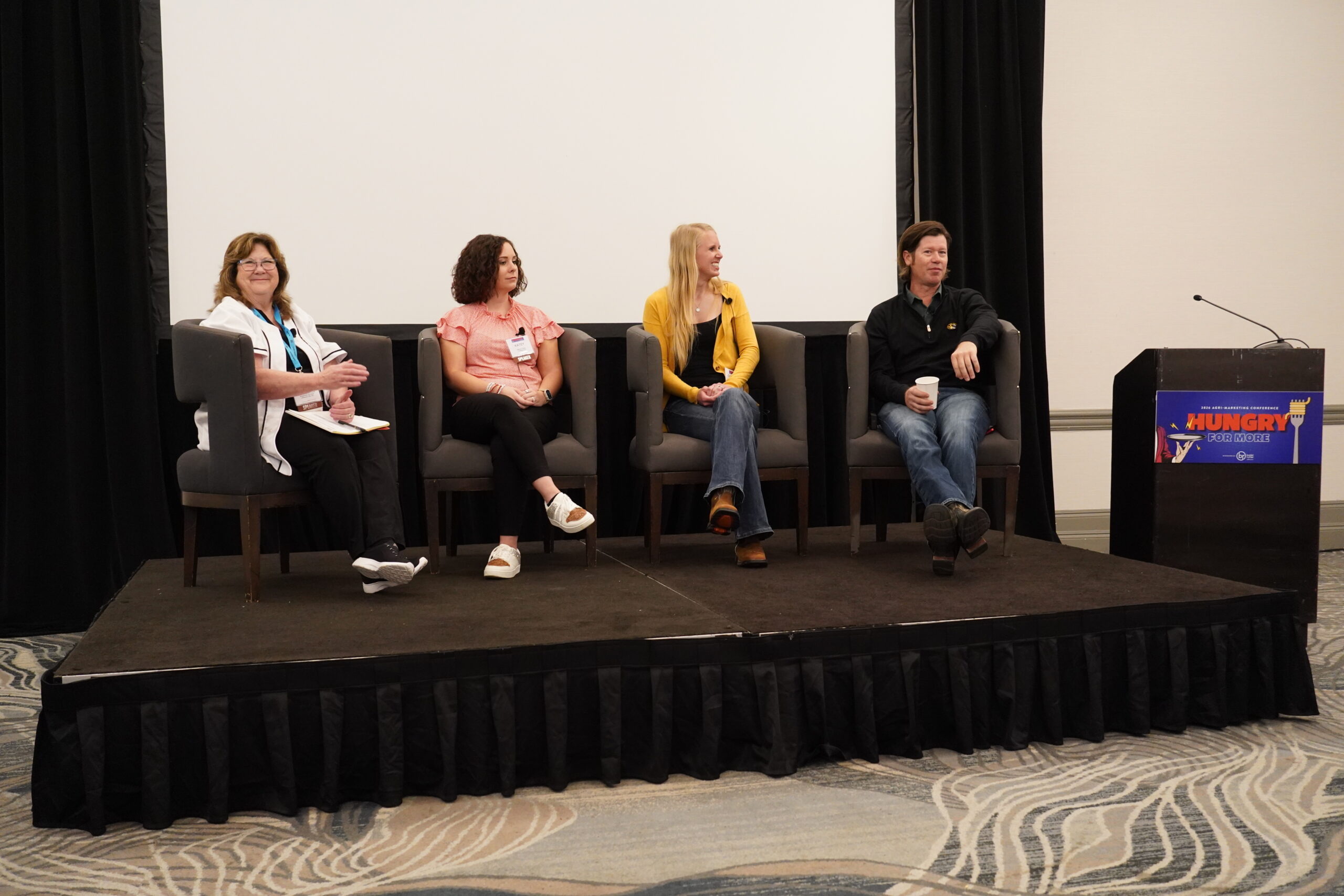
At the National Agri-Marketing Association annual conference in St. Louis, AdFarm’s Farm Voice panel did what most conversations about ag innovation don’t: it let farmers define it for themselves.
Kevin Johansen, a seedstock Hereford and Charolais producer from Lebanon, Missouri; Courtney Lintker, a dairy and grain farmer from Venedy, Illinois; and Katey Foster, a third-generation farmer from Columbus, Kansas, brought different and valuable perspectives to share with a room full of agri-marketers. What they shared was a clear filter for what belongs on the farm and what doesn’t.
“I’m always hesitant on new technology,” Foster said. “But if it’s going to help save me time or yield, that’s when you’re probably going to catch my eye.”
New tools are constant, but adoption is not automatic. On a family operation, every decision comes with questions and often multiple generations weighing in. If something is going to be used, it has to work in real-world and real-farm conditions.
Lintker pointed to where technology earns its place. In dairy, labor and time drive decisions. Tools like activity-monitoring ear tags help her manage cattle when she can’t be everywhere at once. Efficiency is not a bonus, it’s a requirement.
“Anything that catches my eye is something that’s going to make it more efficient for me on the farm,” Lintker said.
Johansen sees a steady flow of startups and new ideas through his involvement beyond the farm. Even with that exposure, the standard stays the same. If a tool cannot prove its value, it doesn’t last. “It has to have a return on what we put in,” he said.
The same discernment carried into the discussion on artificial intelligence, a major topic across the conference. The farmer perspectives ranged from skeptical and “not convinced” to cautious optimism.
Johansen saw room for AI in managing data, especially on the livestock side. He also acknowledged that agriculture tends to move deliberately. Trust is built over time through steady performance and reliability.
When the conversation shifted to sustainability, our panelists shared a common sentiment that sustainable practices are nothing new to farmers.
“We’ve been doing regenerative sustainability practices for 40 plus years,” said Johansen, adding that rotational grazing and forage management practices have been part of operations like his for decades.
For all the frameworks and programs, the long-term viability of agriculture still comes down to the people running the operations.
Lintker described sustainability through the lens of dairy, where byproducts become feed and nutrients cycle back into the soil. “Dairy cattle are really your ultimate up-cyclers because we can use byproducts that would go to waste and turn them into milk,” she said.
Foster brought it back to pressure on land and inputs. As land becomes more expensive and competition increases, efficiency becomes tied to survival. “To be sustainable, we have to keep making enough food… you have to be able to make more with less.”
As the panel moved into how farmers evaluate products and services, the message to marketers came through clearly: clarity wins, overcomplicated messaging does not.
“There is a lot of noise out there,” Johansen said. “You don’t have the time to sift through all that.”
Lintker added what that feels like on the receiving end as a busy farmer. Sorting through multiple versions of the same product is not a priority, and the most valuable perspectives are often the ones closest to home.
“Relying on your peers, your neighbors … that’s the biggest thing,” said Lintker. “Networking and having those good relationships with your local people in the community because they know the ground, they know the area, they know the operation.”
Foster pointed to trust as the filter. Local advisors, agronomists and peers help translate what matters and what doesn’t. Those relationships carry more weight than broad messaging.
Across the conversation, one theme held steady. Innovation only earns its place on the farm when a solution fits the farm in function and finances.
Aligning the perfect message and market for farmers is the unique role Farm Voice is built to play for AdFarm. It brings us as marketers closer to the reality of how decisions get made on the farm by speaking directly to farmers, not making assumptions about what they need or how they think.
At NAMA, that perspective filled a room and left attendees with new insights to bring to their approach to agri-marketing.